
Researchers at IIT Bombay have discovered that heatwaves in the Indo-Gangetic Plains are primarily caused by local land and weather conditions, rather than hot air originating from elsewhere, emphasising the need for location-specific early warning systems.

'During the hot season (April to June), above-normal minimum temperatures are likely over most parts of the country, except in some regions of Maharashtra and Telangana, where minimum temperatures are expected to be normal to below normal,' IMD said.

'Dense' to 'very dense' fog prevailed in parts of Punjab, Haryana, west Rajasthan, Bihar, Delhi, west Uttar Pradesh, Jharkhand, Odisha and Assam.

Increased input costs due to geopolitical conflict in West Asia and unseasonal rain in March negatively impacted volumes of consumer durables makers, particularly air conditioners, in Q4FY26, leading to projected declines in EBITDA and APAT despite revenue growth.

The Congress party's delay in naming the next Chief Minister of Kerala has drawn criticism, particularly from key ally IUML, which warns of potential political fallout from the prolonged uncertainty.
We cannot simply have a 60-65 per cent import dependency in LPG, the bulk of which comes from just one volatile region -- West Asia, points out R Jagannathan.

The electorate did not vote for the BJP as much as they voted against the TMC. This is an important distinction that the new government will ignore at its own peril, points out Vice Admiral Biswajit Dasgupta (retd).
The Airports Authority of India (AAI) on Sunday issued an advisory warning that fog conditions in parts of northern India are affecting visibility and may lead to delays or changes in flight operations at select airports.

The deal shifts the US posture towards India from hostile to neutral, and that matters for growth, points out T T Ram Mohan.

Delhi sweltered under intense heat as the Safdarjung observatory, considered the official marker of the national capital, noted a high of 43.8 degrees Celsius, four notches above the normal average.

No general public allowed for Shubman Gill's Hazare Trophy game

'The people who are outraging, they don't have any substantial argument. They are enraging over manufactured memes and manufactured figures.'

To ensure immediate cooling of the body, the hospital has set up a first-of-its-kind heatstroke unit.

'Nobody asked us to work on this. It was on our own that we decided to embark on this journey.'

Scores of people die every year due to cold waves that sweep across the north Indian plains.

A severe cold wave brought the minimum temperature down to a numbing 1.5 degrees Celsius at the Ridge weather station in central Delhi.

As photographs and video clips were distributed on social media, aviation security watchdog BCAS issued show cause notices to IndiGo and Mumbai airport operator MIAL over the incident, official sources said on Tuesday.

According to a tweet by the weather expert, the icy, severe chill would be experienced between January 14 and 19 and is likely to be at its peak from January 16 to 18.

The famed Darjeeling tea may have slip to a new production low in 2025, as changing weather patterns, a shortage of pluckers and mounting economic stress weigh on the region's gardens.

Temperatures in March will be critical to determining the impact of any unusual heatwave conditions on this year's wheat crop in North India. It is that time of the year when the crop enters its vital grain-filling stage, say meteorologists and crop experts. So far, the high day temperatures in the North are not believed to have any significant impact on the final yields since the crop hasn't entered a stage where heat affects yields.

Temperatures remained above 45 degrees Celsius in large parts of Rajasthan, Haryana, Delhi, Chandigarh and Uttar Pradesh, affecting daily life as many chose to remain indoors in the afternoon.
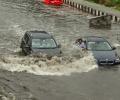
At least 28 people died in rain-related incidents Sunday as heavy downpours lashed north and northwest India, causing landslides, traffic chaos and house collapses, as well as a dam breach which inundated several villages in Haryana.

The severe cold spell in north India has been the harshest on the homeless, but is rough weather the only cause of death of several homeless people?

'That journey across India has changed me forever.'

The weather department has said that the skies are expected to be partly cloudy for the next few days in Delhi.

From a few rain gauges in 1875 to rivalling the world's best weather agencies, the India Meteorological Department (IMD) has weathered its way to becoming a global leader in forecasting.

Low temperature makes it the second coldest day of the season after Monday when the mercury had dipped to 3.1 degrees Celsius, making it the coldest day since December 31, 1999.
Day temperatures recorded at the Chandigarh weather office on Thursday showed a rise at many places in Punjab.

Large parts of north India reeled under numbing cold on Tuesday with the mercury remaining below freezing point at most places in Jammu and Kashmir, while dense fog in the early hours of the morning hit road and rail traffic movement.

The national capital was in the grip of a cold wave, with the sun largely obscured by clouds and pollutants lingering in the atmosphere, leading to reduced visibility. At least 129 flights were cancelled at the Delhi airport on Saturday due to dense fog, according to an official.

The threshold for a heat wave is met when the maximum temperature of a weather station reaches at least 40 degrees Celsius in the plains, 37 degrees in coastal areas, and 30 degrees in hilly regions, and the departure from normal is at least 4.5 notches.

SpaceX, National Aeronautics Space Administration (NASA) and Axiom Space are closely watching weather patterns at the Kennedy Space Centre in Florida where Indian astronaut Shubhanshu Shukla and three others look forward to their travel to the International Space Station (ISS), now scheduled for Wednesday.

Delhi experiences a biting chill with 'cold day' conditions and dense fog, coupled with 'very poor' air quality. The IMD forecasts continued cold weather and potential light rain.
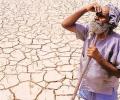
The death toll included over 450 from intense heat wave last summer, according to the World Meteorological Organization.

Delhi recorded a cold wave for the second consecutive day on Friday, with the minimum temperature at Ayanagar in southwest Delhi plunging to a numbing 1.8 degrees Celsius.
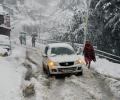
In North India, the sweaters and shawls are out and the coals are burning. The entire region has been hit with a cold wave and the upper areas have even experienced snowfall. The temperatures have dipped in the nation's capital, Punjab, Haryana, Uttarakhand and other northern states. And even as bone-chilling conditions are set to engulf most parts of northern India, weather experts warned that they are just a taste of the biting days to come. Here are some images of the biting cold.

Indians across the country welcomed the New Year 2026 with celebrations, religious observances, and gatherings at tourist spots. The President, Vice President, and Prime Minister extended greetings for peace and prosperity.
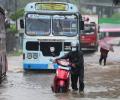
Sri Lanka is facing a severe crisis after Cyclone Ditwah caused widespread flooding and landslides, resulting in numerous deaths and displacement. India has launched 'Operation Sagar Bandhu' to provide relief. The situation is expected to remain critical with rising river levels and continued rainfall.

The fourth T20I between India and South Africa was called off on Wednesday owing to poor visibility after a dense layer of smog engulfed the Ekana Stadium raising serious questions about BCCI's scheduling of matches in northern part of India during peak winter month.

Cyclone Ditwah exits Sri Lanka after causing widespread destruction and over 120 deaths, heading towards the Indian coast. Heavy rains and high winds are expected to continue.
